Plated Dinner Versus Buffet Catering: Which Fits?
Choosing plated dinner versus buffet catering? Compare atmosphere, timing, choice, cost and service to plan a Copenhagen celebration guests will enjoy.
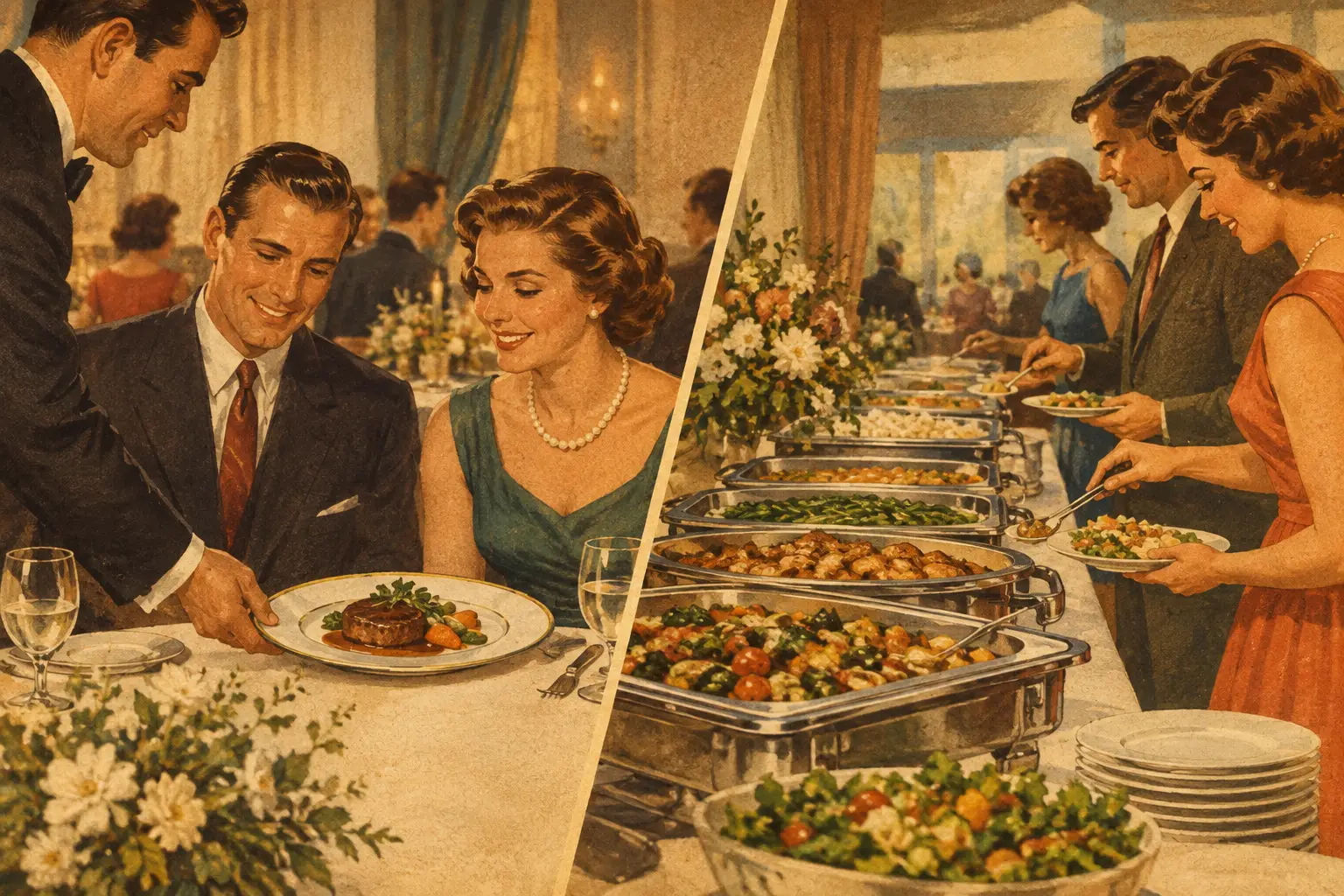
The first question for a birthday dinner, wedding reception or company celebration is rarely just “what shall we serve?” It is how you want people to spend the evening. Plated dinner versus buffet catering shapes the rhythm of the room, the conversations guests have and how relaxed you can be as a host. One creates a shared moment at the table; the other invites guests to move, choose and return for more.
For a gathering in Copenhagen, there is no single right answer. The best format depends on your guest list, venue, schedule and the feeling you want everyone to take home.
Plated dinner versus buffet catering: the real difference
A plated dinner is served course by course to each guest at their seat. It gives the occasion a clear structure: welcome drinks, dinner, speeches, dessert and then the rest of the evening. It can feel polished without being stiff, particularly when the menu is generous, the tables are close enough for conversation and the service is warm.
A buffet places more of the choice in guests’ hands. Food is arranged for guests to serve themselves, often with several dishes, sides and dietary options. It is naturally social: people get up, compare plates, go back for seconds and find new conversations away from their original seat.
Neither is automatically more formal or more fun. A plated meal can feel wonderfully relaxed at a long table with friends, while a well-planned buffet can look considered enough for a wedding. The difference lies in how each format supports your occasion.
Choose a plated dinner for a focused, hosted evening
Plated catering works especially well when the meal is the centrepiece of the event. If you are planning a smaller wedding dinner, an anniversary, a client evening or a birthday where speeches matter, table service helps everyone experience the key moments together.
Guests stay seated at roughly the same time, which makes it easier to welcome the room, make a toast and keep the evening moving without having to gather everyone back from the buffet. For hosts, that structure is reassuring. You can enjoy your own celebration rather than worrying about whether the final guests have found a table or had their first course.
There is also a sense of occasion in receiving a finished plate. A thoughtful starter, main and dessert create a natural journey through the meal, and service gives the table time to settle between each course. This is a good fit when you want an intimate atmosphere, a carefully paced dinner and less movement around the room.
What to consider before choosing plated service
The trade-off is choice. Guests usually select their main course in advance, so dietary requirements and preferences need to be collected early and communicated clearly. For a group with many last-minute confirmations, varied appetites or several dietary needs, this can take more organisation.
Plated dinners also require a timetable that everyone can follow. If guests arrive gradually after work, or the group is likely to be more interested in mingling than sitting down at a set time, a buffet may feel more natural. The key is not to force a formal dinner into a party that wants to stay loose and lively.
Choose a buffet for variety and easy conversation
Buffet catering is made for generous choice. It suits team gatherings, relaxed wedding celebrations, larger birthdays and daytime events where guests may arrive at different times or prefer to eat at their own pace. With a varied spread, everyone can build a plate that suits them, whether they want a little of everything or a second helping of a favourite dish.
It can also make dietary planning simpler when dishes are clearly labelled and there are appealing choices for guests with different needs. Rather than setting aside a separate plate that feels like an afterthought, a good buffet gives every guest a proper place at the table.
The movement is part of the appeal. Guests meet while choosing food, return to their tables with something to talk about and can go back later without needing to catch a server’s attention. For groups where not everyone knows each other, that gentle movement often helps the room feel friendly faster.
When a buffet needs more planning
A buffet still needs a clear plan. Too few serving points can create a queue, and a narrow room can become crowded if everyone gets up at once. The layout should leave space for guests to move comfortably while protecting the relaxed atmosphere you hoped to create.
Timing matters too. For a group with presentations or speeches, arrange these before the buffet opens or once most guests have eaten. Asking people to pause halfway through serving themselves can make a good moment feel fragmented.
A buffet can occasionally create more food waste if quantities and guest numbers are not considered carefully. Experienced caterers plan portions, replenishment and menu balance to keep the table abundant without over-ordering. That is why a guest count with a realistic attendance estimate is more useful than an optimistic one.
Think about the guest experience, not just the menu
When choosing between the two, picture your guests rather than the food first. Are they colleagues meeting for the first time, close friends who will happily share plates, relatives travelling in from different places, or clients you want to thank? Their comfort should guide the format.
A seated dinner gives people a dependable place to land. It is often easier for older relatives, guests with limited mobility and anyone who prefers a calmer setting. Seating plans can also help create conversations by placing people together with care.
A buffet gives guests more independence. It is useful for mixed-age groups, informal occasions and menus that benefit from variety. It works particularly well when the event includes drinks, music or a changing guest flow, because the food does not demand that everyone pause at the same moment.
For either format, make dietary information a priority from the start. Ask about allergies and requirements with the invitation, not the week before the event. Clear answers allow the menu and service to feel generous rather than complicated on the day.
Budget, staffing and timing all play a part
It is tempting to assume that a buffet is always the lower-cost option, but catering costs depend on the menu, presentation, staffing, equipment, guest number and venue logistics. A buffet may require fewer servers per guest, while a plated dinner needs more coordinated service. On the other hand, a buffet with many dishes, elaborate styling and repeated replenishment can be just as considered as a seated meal.
Ask for a complete picture of what is included: food, service staff, crockery, linen, dietary alternatives, set-up, clearing and drinks. A lower menu price can look different once the practical details are added. Transparent packages make it much easier to compare options fairly.
Consider the schedule as well. A plated three-course dinner takes longer than a buffet lunch, but that is not a drawback if you have planned for it. If your venue hire is short or you want to move quickly from food to dancing, a buffet can keep the night flexible. If dinner is meant to be a meaningful part of the celebration, give it the time it deserves.
A middle ground can be the best answer
Some events benefit from both formats. Begin with shared snacks or a small buffet during arrival drinks, then bring everyone together for a plated main course. Or serve a plated starter and let guests explore a dessert table later in the evening. This can provide the polish of table service while keeping the generosity and choice people enjoy.
For celebrations in a private setting, Venner Copenhagen can help shape the food and flow around your guest list, from an intimate lunch to a lively evening with drinks. A good event plan considers more than plates: where guests arrive, when speeches happen, how drinks are served and when the room changes from dinner to celebration.
The most welcoming choice is the one that lets your guests feel looked after without having to think about the logistics. Choose plated service when you want everyone gathered around the same moment. Choose a buffet when freedom, variety and easy mingling are the heart of the occasion - then let the people around the table make it memorable.