Restaurant Cellar Versus Banquet Hall for Your Event
Choosing a restaurant cellar versus banquet hall? Compare atmosphere, privacy, food, flexibility and planning to find the right Copenhagen event space.
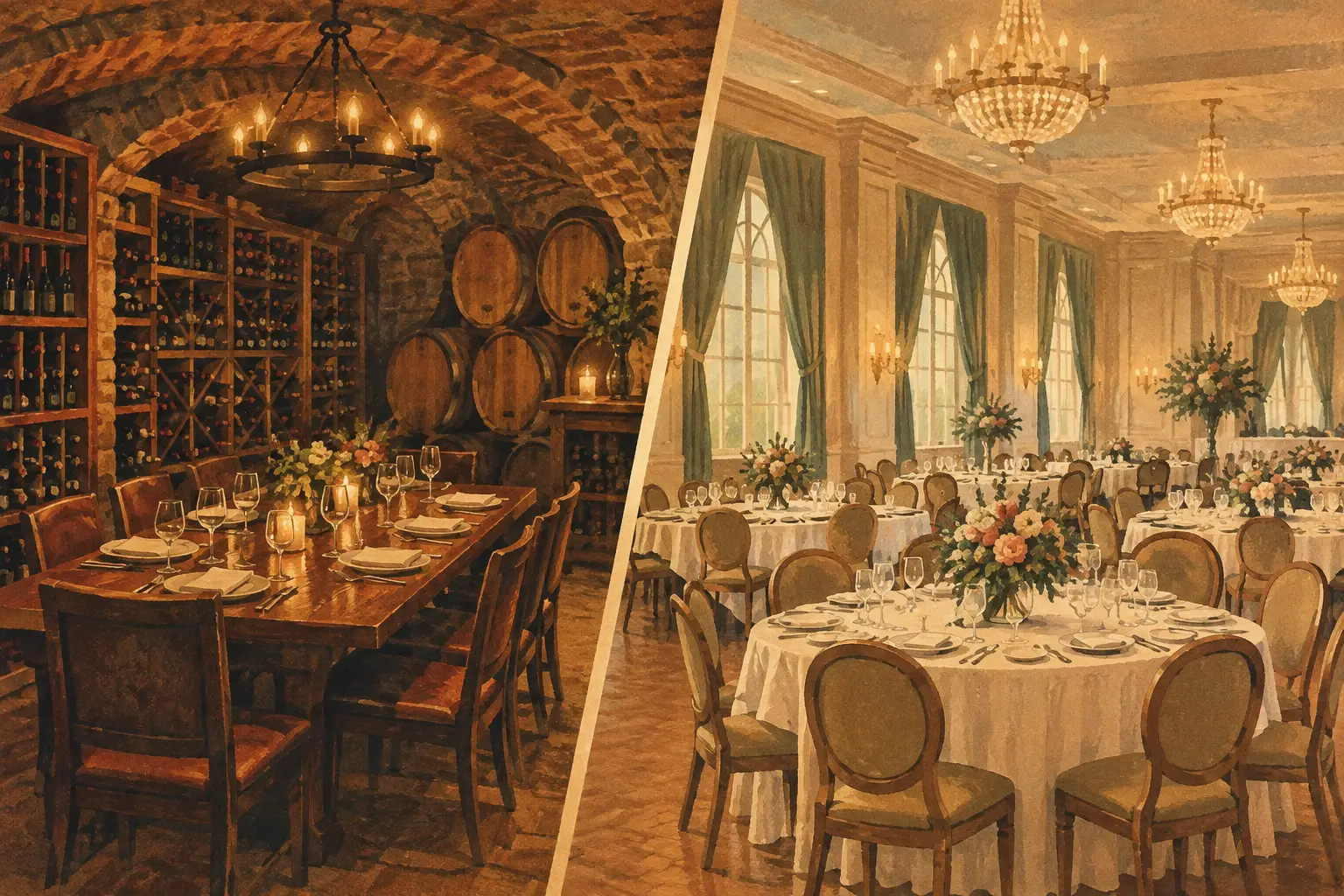
A great event is rarely remembered for its chair covers. People remember the first drink, the easy conversations, the feeling that everyone had room to settle in and enjoy themselves. When choosing a restaurant cellar versus banquet hall, the real question is not which space looks best empty. It is which one will make your particular group feel most at home.
For a birthday with old friends, a small wedding lunch, a team dinner or a client gathering, the room shapes the whole occasion. It affects how guests arrive, where they gather, how food is served and whether the evening feels relaxed or overly formal. Both options can work beautifully, but they create very different kinds of celebrations.
Restaurant cellar versus banquet hall: the atmosphere
A restaurant cellar tends to feel tucked away from the city. There is something special about bringing everyone downstairs from a busy Copenhagen street and into a private room set apart from the everyday rhythm of the restaurant. It feels like a gathering within a gathering: intimate, warm and a little more personal from the moment guests walk in.
That atmosphere suits occasions where connection matters most. Think long birthday lunches, wedding dinners with your nearest people, farewell drinks, family celebrations or a company evening where colleagues can talk beyond their usual workday roles. A cellar gives the host a sense of having their own place for the night, while still enjoying the energy, kitchen and bar service of a restaurant above.
A banquet hall usually makes a different promise. It offers scale, formality and a more open canvas. High guest numbers, speeches from a stage, a ceremony, a dance floor or a carefully styled theme can all be easier to accommodate in a larger hall. If your event needs a dramatic arrival, an expansive seating plan or room to build a full programme around dinner, that space can be the right fit.
Neither atmosphere is automatically better. A cellar is not simply a smaller hall, and a hall is not necessarily more impressive. The best room is the one that suits the way you want guests to spend their time together.
Privacy without feeling cut off
For many hosts, privacy is the deciding factor. A private cellar gives you a clear boundary around your event. Your group can laugh loudly, raise a toast, play a playlist and move through the evening without sharing every moment with other diners. For a celebration, that freedom changes the mood quickly.
At the same time, privacy should not mean isolation. Ask how the room connects to the rest of the venue. Is there a dedicated entrance or easy access to the bar? Will your guests be welcomed by someone who knows the plan? Is the room close enough to the kitchen for food and drinks to arrive at a comfortable pace? A good private dining space feels exclusive while still being properly looked after.
Banquet halls can also be private, particularly when hired exclusively. Yet some feel more detached from the food and drink experience, especially if catering and bar service must be brought in separately. That can suit a highly produced event, but it creates more decisions for the organiser. A restaurant cellar often keeps the planning simpler because the room, kitchen, bar and host team already work together.
Food and drink can lead the decision
If your guests care about the meal as much as the occasion, a restaurant setting has a natural advantage. The food is prepared by a kitchen already set up for service, and the drinks are handled by a bar team who understand the flow of lunch, dinner and late-evening celebrations. Rather than designing every detail from scratch, you can focus on choosing a menu that feels generous and right for your group.
This is particularly useful for groups with different preferences. A shared menu can bring everyone together, while considered vegetarian, vegan and allergy-friendly options make guests feel included. For daytime gatherings, brunch and coffee can set an easy, sociable tone. For evening events, welcome drinks, wine with dinner and a final round at the bar can create a natural rhythm without making the event feel over-programmed.
A banquet hall may offer greater freedom to bring in a particular caterer, arrange a bespoke bar or build a food concept around your theme. That freedom is valuable when food is part of a larger production. It can also mean coordinating suppliers, confirming service timings, arranging equipment and making sure responsibility is clear if plans change.
For a host who wants exceptional hospitality with fewer moving parts, a cellar connected to a restaurant is often the more relaxed choice. At Venner Copenhagen, for example, the private cellar combines an intimate setting with the food, drinks and hosting needed for celebrations to run smoothly.
Consider the guest list, not just the headcount
Guest numbers matter, but the character of the group matters just as much. A cellar works best when people are meant to meet, mingle and share the same experience. It can make a group of colleagues feel less like attendees at a work function and more like guests at a proper dinner. For friends and family, the closer setting encourages the kind of conversations that carry on long after dessert.
A banquet hall earns its place when the guest list is large enough that intimacy would become crowding. It is also a strong choice for events with several distinct moments: arrival drinks, a seated meal, presentations, entertainment and dancing. If everyone needs a clear view of the speaker, a large hall can be far more practical than trying to make a smaller room do too much.
Before visiting spaces, picture your guests at three points: arriving, eating and staying late. Will they want to stand with a drink before sitting down? Do they need space for speeches? Are they likely to linger over coffee, or will they want to dance? The answers reveal more than a simple capacity figure ever can.
The planning trade-off: freedom or ease
A banquet hall is often ideal for hosts who have a clear creative vision and the time to build it. You may be able to choose your own décor, entertainment, table layout and suppliers. For a large wedding or a company awards night, that flexibility can be essential.
But flexibility asks more of the organiser. Someone needs to coordinate deliveries, styling, music, catering schedules, technical requirements, clearing times and the inevitable last-minute question. If you enjoy shaping every detail, that may be part of the fun. If you are already balancing a guest list, budget and work calendar, it can become a lot.
A restaurant cellar offers a more guided route. The room already has character, and established party packages can make choices clearer from the start. You can still add personal touches through flowers, place cards, a cake, speeches or a playlist, but the foundations are handled by people who host events every week.
When comparing quotes, look beyond the room-hire figure. Ask what is included in the price, whether there is a minimum spend, how long you have the room, what staffing is provided and whether drinks, menu changes or additional hours are charged separately. Transparent details make it much easier to choose confidently.
Choose the setting that supports the occasion
A restaurant cellar is usually the stronger choice when you want a private, food-led celebration with warmth, personality and professional service close at hand. It suits groups who value good conversation and a setting that feels like their own, without the pressure of creating an event from an empty room.
A banquet hall is often better when size, spectacle or a highly bespoke format leads the brief. It gives you room to think bigger, especially for major milestones and formal programmes, but it can demand more planning and a larger budget.
The most helpful next step is simple: start with the feeling you want guests to take home. If you want them to say, “It felt like us,” choose the room that leaves space for people to eat well, raise a glass and enjoy one another. Then let a thoughtful host take care of the rest.